

We design and build custom Shopify stores that are fast, flexible, and designed to make you more money.
Stores launched
Typical timeline
Shopify Online Store
Most agencies hand you off three times before launch. We don't. Same team designs, builds, and ships your store from kickoff to live.
Before a single pixel is pushed, we map your customer journey, audit your current funnel, and prioritize the highest-leverage moves. You leave week one with a single-page strategy doc - not a 60-slide deck.
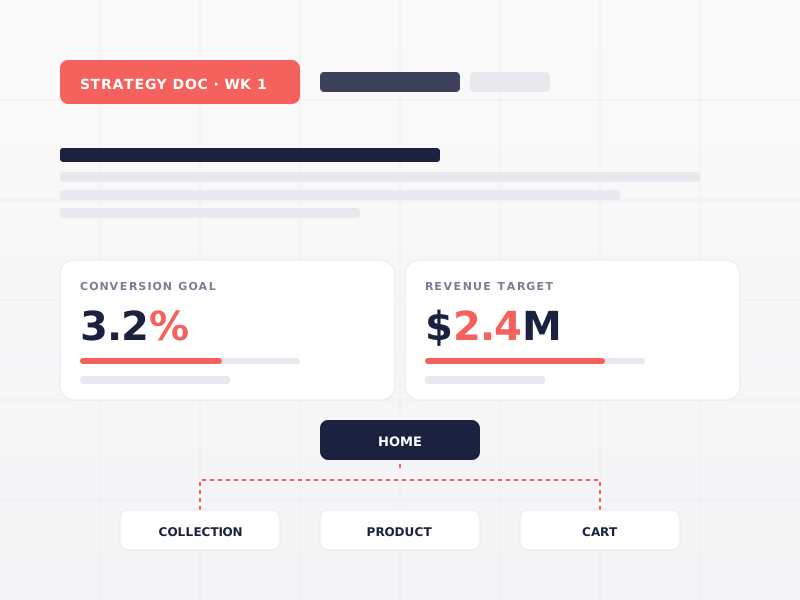
Every section, every microinteraction is chosen to move customers down-funnel. We design in Figma but think in Shopify, every component we ship is built to be edited natively by your team.
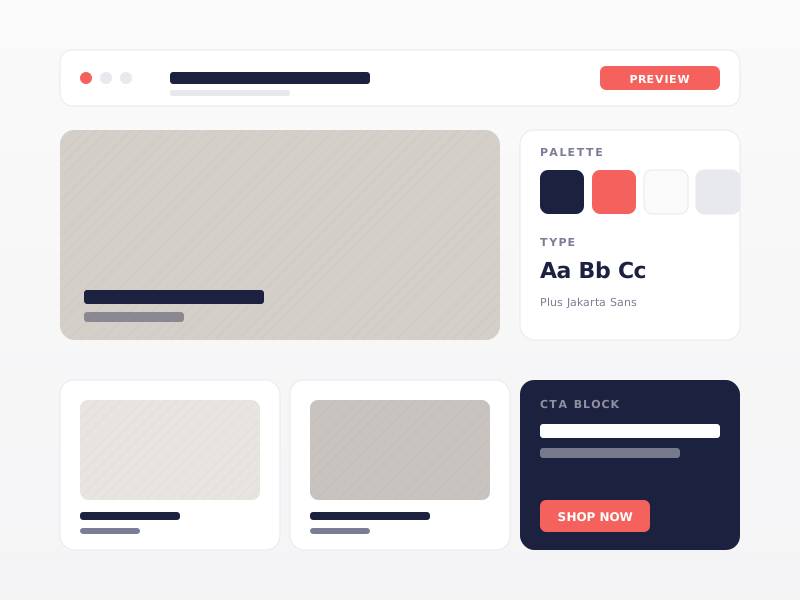
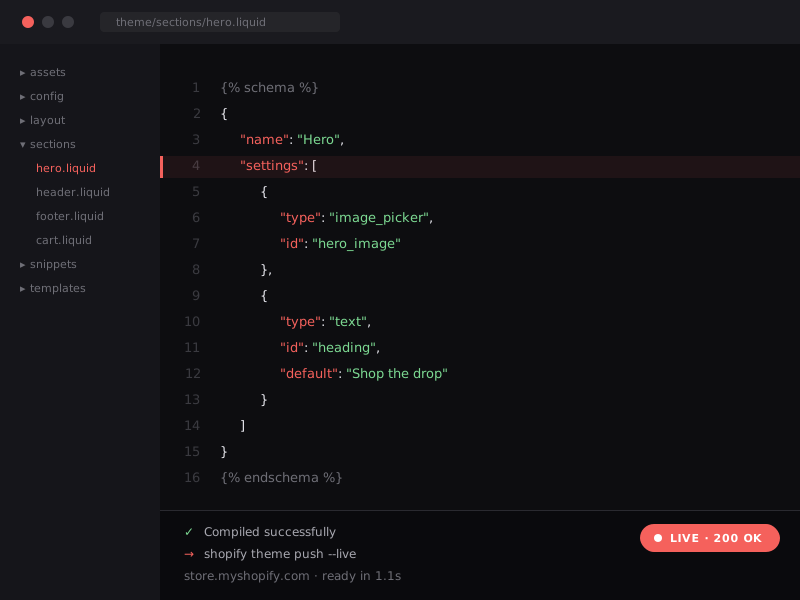
No bloated themes, no inherited tech debt. Liquid, vanilla JS, and Shopify-native sections so your store loads fast, ranks well, and is editable by anyone on your team.
Our process is deliberately simple. Each step has a clear deliverable and a fixed timeline, so you always know what's happening and what's next.
Same project, four different ways to get there. Here's an honest look at what you're trading off.
| What you get |  |
Agencies | Freelancers | DIY |
|---|---|---|---|---|
| Premium design | ✓ | ✓ | − | − |
| Expert strategy | ✓ | ✓ | − | − |
| Proven to convert | ✓ | ✓ | − | − |
| Fast delivery | ✓ | − | ✓ | ✓ |
| Cost-efficient | ✓ | − | ✓ | ✓ |
| Easy to update | ✓ | − | − | ✓ |
| Reduced third party app costs | ✓ | − | − | − |
A complete storefront built from your conversion goals backward. You get a single week for strategy (customer journey audit, funnel analysis, feature prioritization), 2–3 weeks of design in Figma with two rounds of revisions, then development using Shopify 2.0 so your team can edit everything natively. We handle integrations (subscriptions, reviews, loyalty, 3PL and anything else your store might need), Core Web Vitals optimization, and QA testing. Then we transition the store to you with full documentation and a two-week support window as you learn the system. No handoffs between teams; the same 3–4 people who start your project ship it live.
Most stores go live in 4–8 weeks. If you're migrating from WooCommerce, BigCommerce, or Squarespace, we build in time for data verification and testing, those typically land in 8–10 weeks. Custom projects with ERP integration, B2B features, or multi-vendor setup need more runway and we'll give you a fixed timeline before you commit. What you won't have is scope creep; everything is scoped and priced upfront, so the timeline stays the timeline.
Perfect timing, actually. We'll wait for your rebrand assets to be finalized, then use them as the north star for your storefront design. Your new brand identity informs the entire store structure, not the other way around. Just factor an extra week or two into the timeline if your rebrand is still in progress. We'll work with placeholders and swap in final assets when they're ready.
Three things: First, we design for revenue, not awards. Every section, button placement, and checkout flow is chosen to move customers down your funnel, not because it looks nice. Second, we code clean. No bloated themes, no 50-app dependency, just vanilla JavaScript and Shopify-native sections that load fast and rank well. Third, we don't hand your store off to a project manager who disappears; the same design and dev team that built it supports you post-launch. That matters because we catch edge cases your team finds, we answer questions fast, and we actually care how it performs.
Not necessarily. Your theme is built in Shopify 2.0 so every section and component can be edited natively (add content, create new pages, duplicate sections, test new layouts). You don't need Liquid knowledge. That said, if you want ongoing experiments, performance optimization, or new features down the line, we offer maintenance and CRO retainers starting at $2,500/month. A lot of our clients start there.
We'll ask for brand guidelines, logo files, fonts, and any product/lifestyle imagery you have. Product data (descriptions, specs, images) is critical. If content is still being shot or written, we use placeholders and swap in the real thing before launch, no extra charge, that's normal. What does cost extra: design revisions after you've approved a direction. Two rounds of feedback are included; round three is billable. It protects both of us from design death-by-a-thousand-cuts.
Figma for design (you get edit access so you can see comps and comment live), GitHub for version control and code reviews, Shopify's CLI for local development, and Liquid for any custom functionality. For project communication, we use ClickUp for task management and Slack as the day-to-day hub. You get access to Linear so you always see what's next and what shipped; no surprises.
Ready to grow?
Let's talk about your project. We'll get back to you within 24 hours.